ATEX industrial mixers: optimise your process in complete safety
Industrial agitators play a crucial role in many manufacturing and mixing processes in industries such as food, chemicals, pharmaceuticals and many others. Depending on the process constraints and regulatory obligations, equipment complying with the ATEX directive must be used.
Samoa MILARET-LOUVIGNY, QHSE Manager, and Grégory BADEY, President, explain how AGITEC designs and manufactures industrial stirrers that meet the requirements of the ATEX 2014/34/EU Directive in order to avoid a potential risk of explosion throughout the stirring process.
WHAT ARE THE REGULATIONS FOR THE PROTECTION OF WORKERS AND MACHINERY?
ATEX regulations are the result of two European directives:
- Directive 1999/99/EC on the protection and safety of workers potentially at risk from explosive atmospheres
- Directive ATEX 2014/34/EU on protective equipment and appliances intended for use in potentially explosive atmospheres.
This directive defines the essential health and safety requirements that equipment must meet in order to operate safely.
« These regulations require compliance with safety standards to ensure the protection of workers, equipment and the environment. These standards are used to ensure that equipment does not generate sources of ignition in environments where flammable substances are present »
- explains Samoa MILARET-LOUVIGNY.
The agitator drives and seals are chosen according to the zoning defined by the user and the products to be mixed, as well as the temperature inside and outside the tank during agitation and after agitation (residues and/or dust in suspension).
WHAT IS A POTENTIALLY EXPLOSIVE ATMOSPHERE?
Samoa MILARET-LOUVIGNY tells us that:
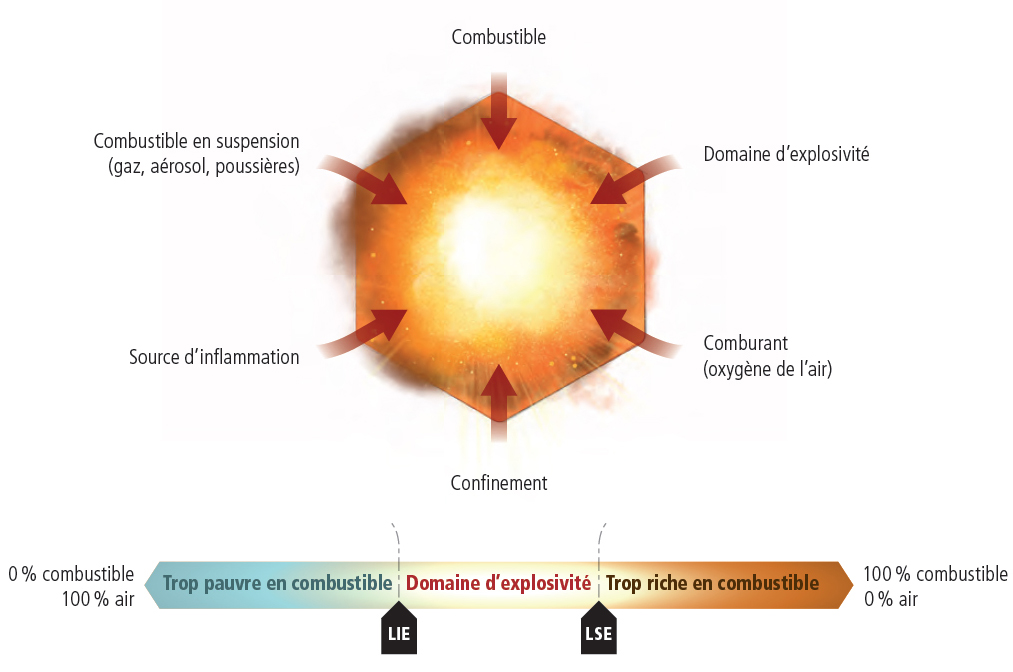
« In an potentially EXplosive ATMmosphere, flammable substances in the form of gases, vapours, mists and/or combustible dusts are present in the air. These substances are categorised into two classes: "gas" and "dust". The gas zone corresponds to gases such as methane, propane and hydrogen. Dusts, on the other hand, can come from a variety of sources, such as cereals or starch in the food industry, aluminium or coal in industry, etc.
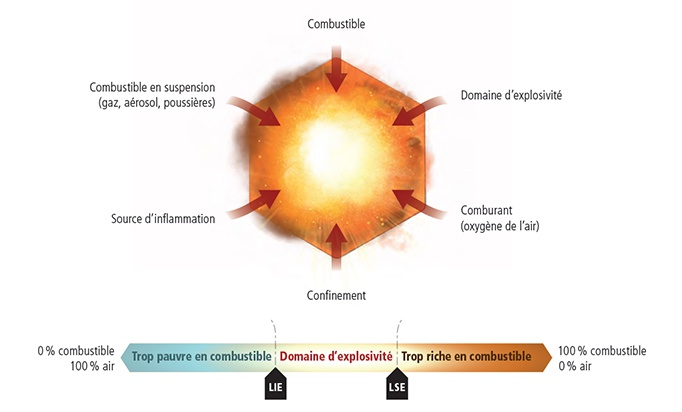
An atmosphere becomes explosive as soon as the parameters (explosive range, temperature, etc.) are met to initiate combustion in the presence of three components: an oxidant (oxygen, for example), a fuel (gas and/or dust) and a source of ignition (a flame, for example) ».
A potentially explosive atmosphere differs from an explosive atmosphere in that a potential risk of explosion may arise due to foreseeable circumstances. Its usual composition and initial conditions are not explosive.
WHAT ARE THE DIFFERENT ATEX ZONES?
A classification system defines different ATEX Zones according to the frequency of occurrence, the duration of the presence of a flammable substance and the nature of that substance.
Zone X combustible in the form of gas, vapour or mist.
Zone 2X combustible in the form of a dust cloud.
In zone 0, an explosive atmosphere is present permanently or for long periods. Flammable substances are present in large quantities, making the risk of explosion likely. Equipment used in this zone must be specifically designed and certified for this use.
In this type of zone, an explosive atmosphere is likely to occur occasionally during normal operation of equipment. This risk may arise as a result of leaks, evaporation or other temporary situations.
Zone 2 is an area where an explosive atmosphere occasionally forms. If this type of atmosphere were to form, its duration would necessarily be short.
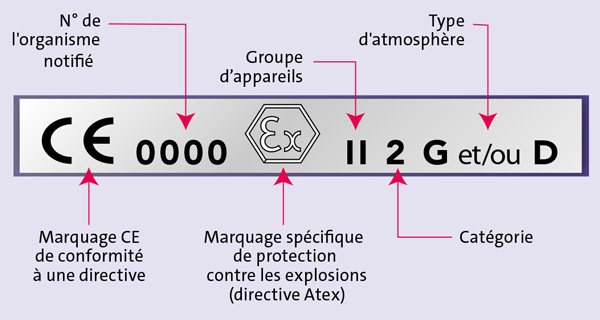
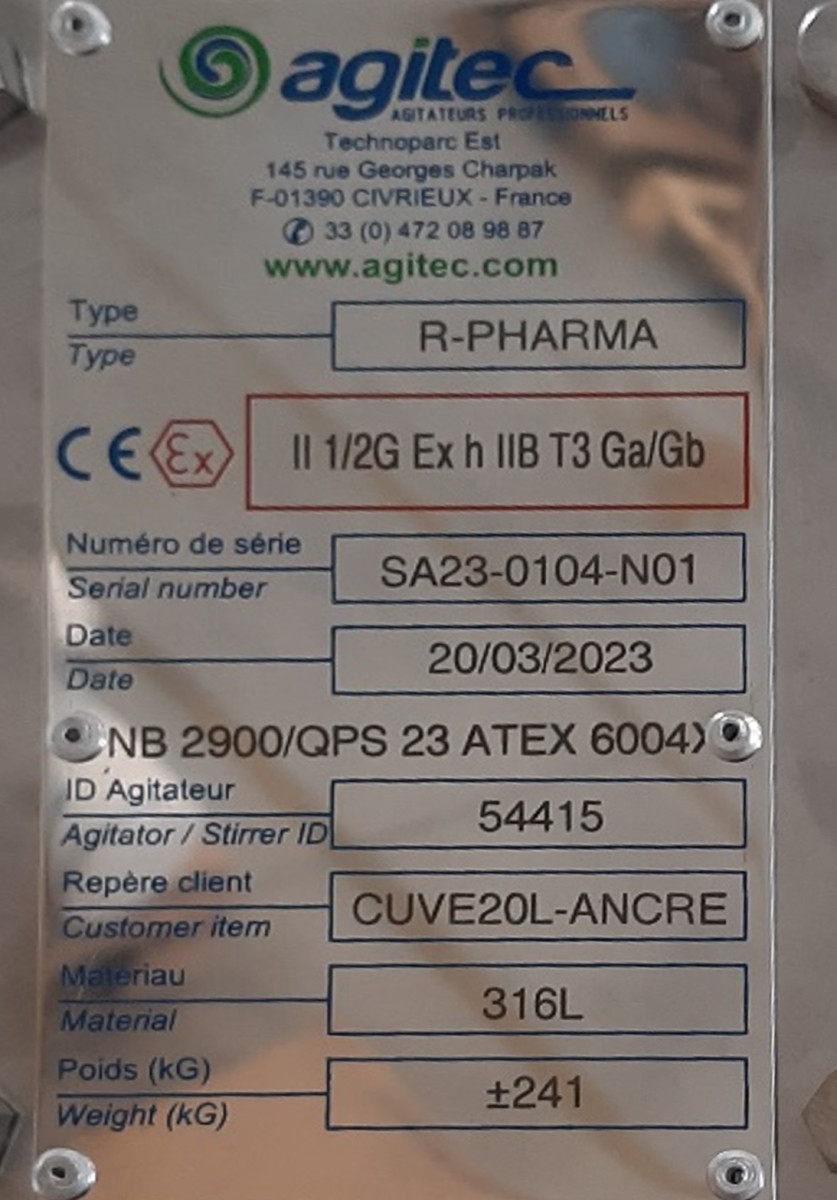
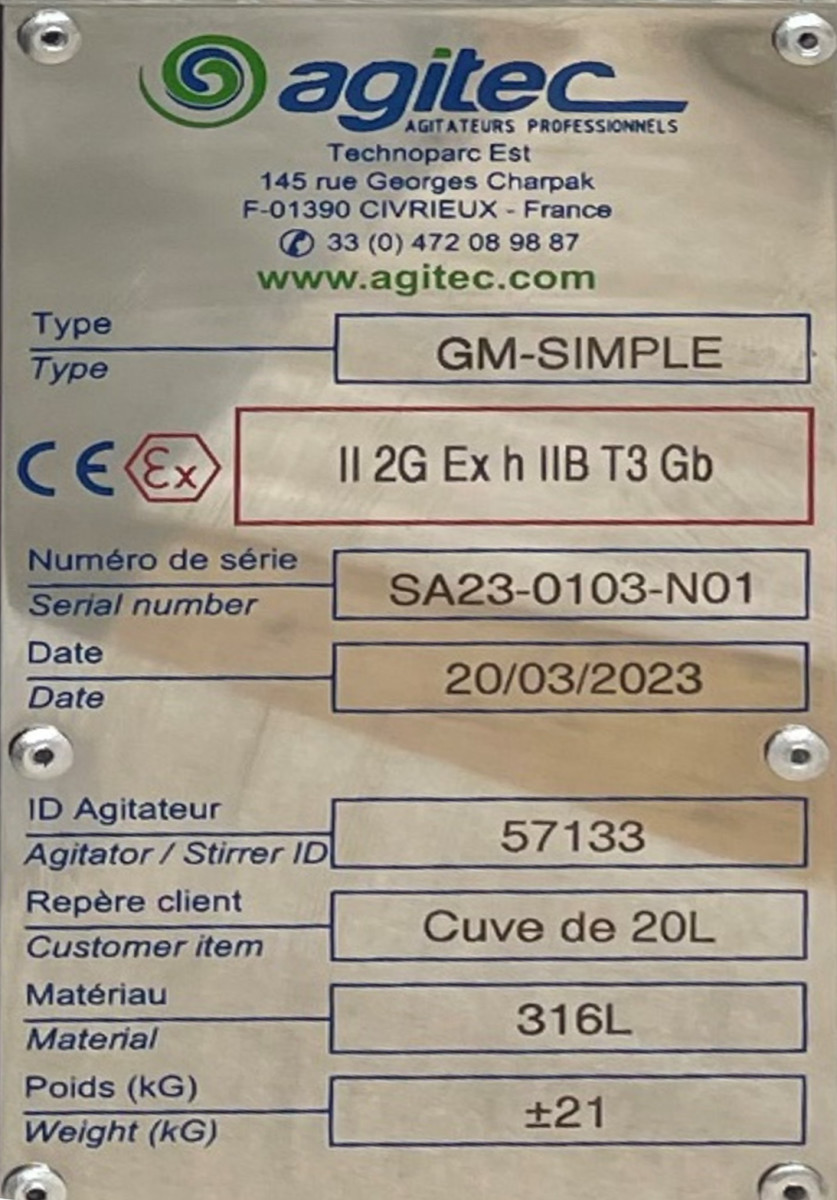
All equipment used in potentially explosive atmospheres is marked in accordance with the type of zone and the level of safety required.
All equipment used in potentially explosive atmospheres must be marked in accordance with the type of zone and the level of safety required.
Notified body number / Equipment group / Type of atmosphere
_____
CE marking of conformity to a directive / Specific explosion protection marking (Atex directive) / Category
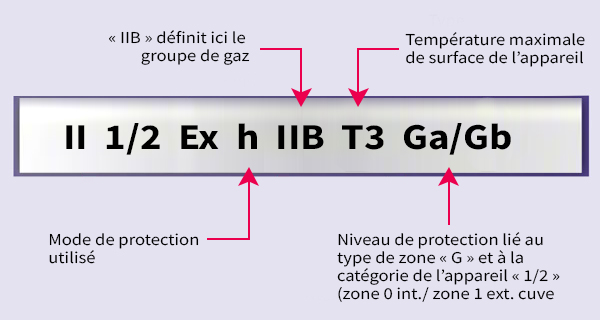
This marking is supplemented by a specific standard marking to identify the characteristics of the equipment.
"II B" here defines the gas group / Maximum appliance surface temperature
__
Type of protection used / Level of protection linked to zone type "G" and device category "1/2" (Zone 0 int./zone 1 ext.)
(int = indoor / ext. = outdoor)
WHAT TEMPERATURE CLASSES ARE ENCOUNTERED IN ATEX ZONES?
Grégory BADEY adds that the temperature parameter is also important. The fact is,
« Temperature classifications are defined and prescribed by the user customer in relation to the overall analysis of his installation.
The agitator's temperature rating is defined by the operating conditions, i.e. it may come into contact with a process at a higher temperature than specified. This difference in temperature can lead to a downgrading of the device's "T" zone, which means that it no longer complies with the specifications.
For example, a customer may specify T4 even though the process operating conditions range from -10 to +150°. In this case, the agitator manufacturer has to opt for a T3 agitator so that it meets the thermal contact constraints of up to +150°. AGITEC is always attentive to its customers' expectations and to compliance with the standards and directives applicable in ATEX zones. ».
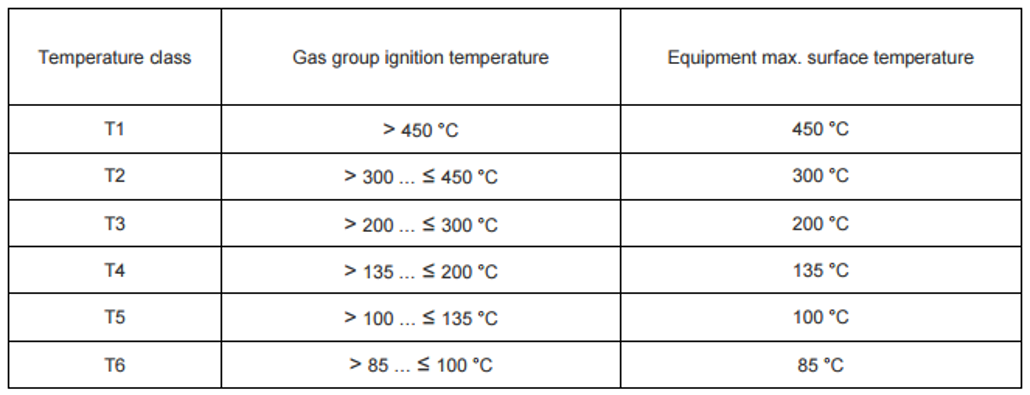
According to NF EN ISO 80079-36, the temperature classification is defined as follows:
| Maximum permissible surface temperature |
Device marking |
| 450°C |
T1 |
| 300°C |
T2 |
| 200°C |
T3 |
| 135°C |
T4 |
| 100°C |
T5 |
| 85°C |
T6 |
ou
WHAT ARE THE SPECIFIC TECHNICAL FEATURES OF AN ATEX AGITATOR?
Stirring machines have many technical characteristics. Agitators need to take each of them into account.
According to Grégory BADEY
« One of the primary aims in designing an ATEX agitator is always to ensure equipotentiality between all its components. This is essential to avoid any risk of arcing that could be generated by static electricity during operation of the equipment. Insulating components that could be the source of this type of charge should be avoided as far as possible (e.g. plastic coating on a stirrer shaft).
In addition, as the agitator is a rotating machine, AGITEC has set a peripheral speed limit for friction parts that rotate dry like a mechanical seal. This limit is 1m.s-1. »
Grégory BADEY explains that "the choice of on-board motor is closely linked to customer specifications, the type of use (fixed or variable speed) and the limits set by motor manufacturers. The motor can be, for the simplest, in increased safety and, for the most complex, explosion-proof. The motor can be fitted with PTC thermistors or temperature sensors (PTC100 or PT1000). The choice of gearboxes follows the same process as that established for the choice of motors.
In addition, in accordance with AGITEC's self-imposed specifications, all bolts, screws and nuts are braked by a mechanical anti-loosening system.
Finally, the technical definition of the seals, often a sophisticated component for this type of installation, is defined in close collaboration with the manufacturers of the sealing systems, thus meeting the constraints of the ATEX installations of the user customers.
HOW DO YOU CHOOSE THE RIGHT AGITATOR FOR YOUR ATEX APPLICATION?
A user's specifications are open to interpretation. Each agitator manufacturer responds differently depending on the risk analysis they carry out. As a result, the proposed standards solution also differs from one agitator to another.
For Grégory BADEY,
« The solutions offered by AGITEC are tailored both to business needs and to the process safety constraints built into the agitator. The chosen solution is often supplemented by specific customer requirements. In fact, for certain applications, redundant systems carrying out a double control to mitigate an ATEX risk can be provided. They may, for example, correspond to several repeat checks on mechanical seal lubrication systems. ».
WHAT TYPES OF AGITATOR ARE SUITABLE FOR USE IN EXPLOSIVE ATMOSPHERES?
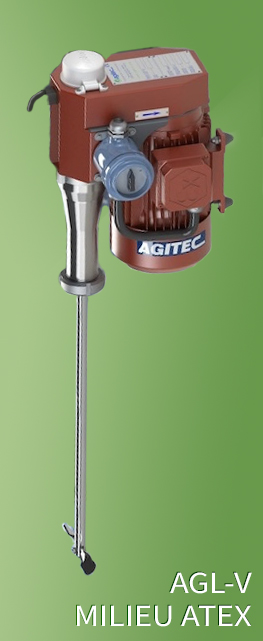
All types of stirring tools can be adapted to an explosive atmosphere. Depending on the environment and the application, we design customised mixers. This could be a side stirrer, a tank top stirrer or a tank bottom stirrer.
WHAT TYPES OF APPLICATIONS REQUIRE ATEX INDUSTRIAL MIXERS?
There are many applications requiring ATEX industrial mixers. These include the manufacture of paints or alcohol (e.g. ethanol). In the chemical industry, for mixing petroleum products, and in the cosmetics sector, for manufacturing perfumes, the use of ATEX mixers is essential. In the wine industry, ATEX industrial agitators are used to maintain the homogeneity of alcohol mixtures.
WHAT SAFETY STANDARDS MUST ATEX INDUSTRIAL MIXERS COMPLY WITH?
ATEX industrial mixers must comply with a number of specific standards to ensure their safe use in potentially explosive environments. The most commonly applied standards are as follows.
NF EN 1127-1 : Explosive atmospheres. Explosion prevention and protection. Part 1: Fundamental concepts and methodology,
NF EN 60079 series: These standards specify the requirements for electrical equipment used in explosive atmospheres. They define the basic principles, concepts and protection methods for ATEX electrical equipment and the method for defining ATEX zones.
NF EN ISO 80079 series: These standards cover the general requirements for the design, selection and assembly of mechanical equipment used in potentially explosive atmospheres, as well as the applicable methods of protection. They cover mechanical equipment, including agitators, which can generate their own ignition source during operation.
These standards provide a framework for the technical requirements and conformity assessment procedures used for ATEX industrial mixers.
These standards vary from country to country. To ensure that your ATEX industrial mixers comply with the safety standards, you need to comply with the specific regulations applicable in each country.